When Vivek Dubey started CurvetAI, he was trying to solve a fairly ordinary problem. AI tools were becoming difficult to keep up with. Every few days, there seemed to be a new writing app, image generator, coding assistant, or AI agent making noise online. People were bookmarking tools faster than they could actually use them. Most users ended up with too many tabs open, too many subscriptions, and no simple way to make the tools work together.
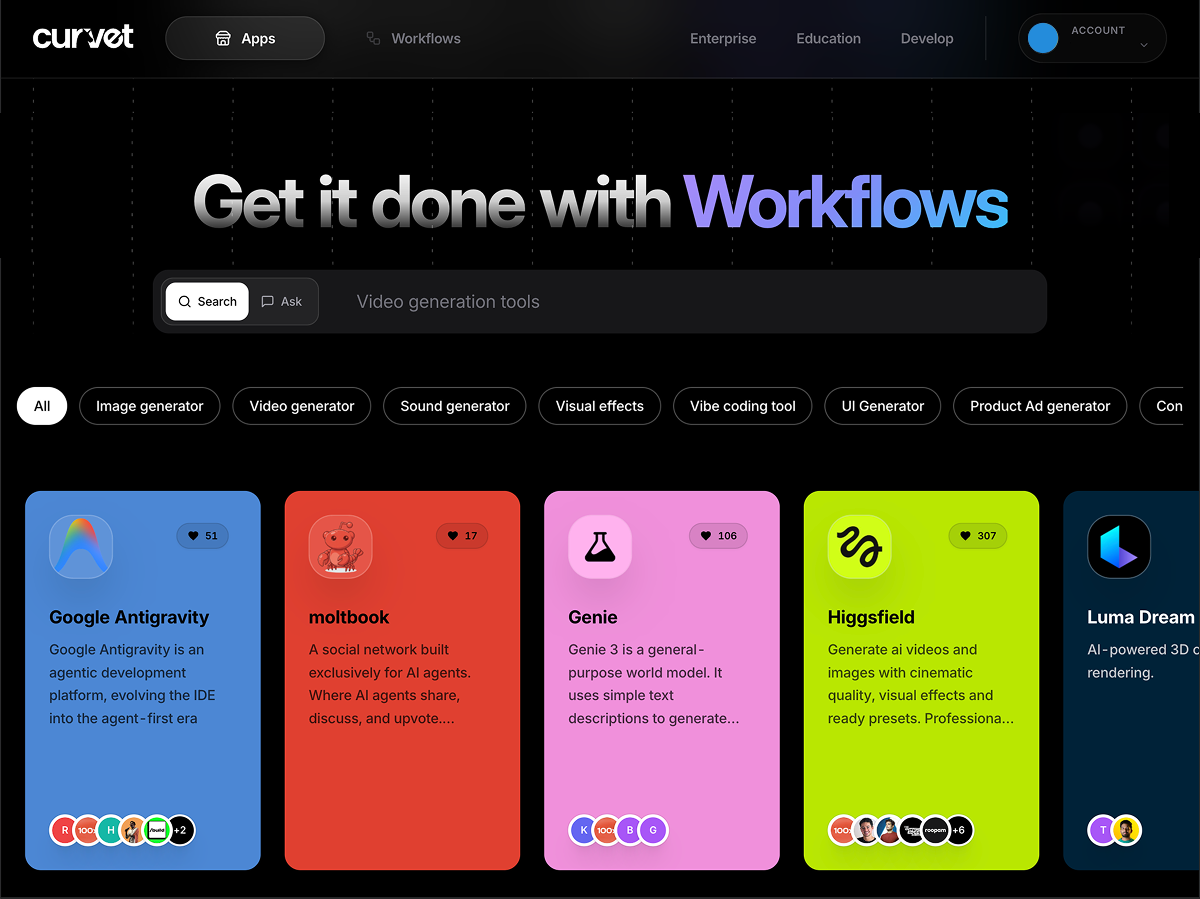
CurvetAI started as a response to that confusion, a directory where users could find AI apps, prompts, and tools based on what they were trying to do. Write something. Edit a video. Generate images. Automate repetitive work. Instead of digging through scattered recommendations online, users could search in one place.
At the time, Dubey was building the company largely as an experiment on Cursor. An industrial designer by education, he had previously worked across Infosys, Microsoft, and Google on product and AI-related systems. But CurvetAI did not come out of a corporate roadmap. It came out of watching how people were actually using AI, or struggling to.
Within a few months, the platform started picking up attention. Traffic grew quickly, especially outside India. Users from the United States eventually overtook India on the platform, which surprised even the team.
Dubey had seen startup uncertainty before. Before CurvetAI, he and his co-founder had built a hyperlocal commerce app during the pandemic. The company did not survive, but the experience changed how they approached product building the second time around.
“The first startup taught us that timing matters almost as much as the idea itself,” he says. “You learn very quickly whether people genuinely need what you are building.”
People clearly liked discovering tools on CurvetAI. But after a point, another pattern became obvious. Users were finding AI products faster than they could organize them. Someone would use one platform for writing, another for visuals, another for automation, and then manually move everything between tabs. Even basic experimentation started feeling unnecessarily complicated.
Eventually, the company stopped focusing only on discovery and started building Canvas. Canvas pulls different AI models and agents into one workspace. Users can write, generate images, test prompts, automate tasks, or experiment with workflows without spending time on APIs, setup, or separate billing systems.
Dubey says most users are not interested in the technical side of AI infrastructure. “They just want to open something and start building,” he says. “A lot of people are curious about AI, but they get stuck before they even begin.”
That simplicity is what seems to be drawing users toward the platform now, especially students, creators, agencies, and smaller teams experimenting with AI in everyday work. CurvetAI has also started working with educational institutes and agencies using the platform for training, workflow experiments, and creative projects.
A large share of the company’s visibility has come through Dubey’s own content online. His Instagram reels around vibecoding and AI experiments, posted through the handle vivek.ux, have reached millions of views over the last few months.
The audience around those videos does not look like a traditional tech crowd either. A lot of them are young creators, design students, indie builders, or first-time founders trying to understand how AI fits into their work. For Dubey, that matters more than sounding futuristic. “AI should not feel intimidating,” he shares. “If people feel like they need ten tools and technical knowledge just to try an idea, they stop before they start.”
CurvetAI is still early, and the market around it is moving fast. But the company is betting on something fairly simple: people do not necessarily want more AI products. They want fewer steps between an idea and the ability to actually do something with it.
Tags
AI workflow platform
CurvetAI Canvas
AI tools workspace
No-setup AI platform
Vivek Dubey CurvetAI